12 Aug 2026
Aligning Dynamic Probability Models Across Tennis Sets and Football Halves for Stake Coordination
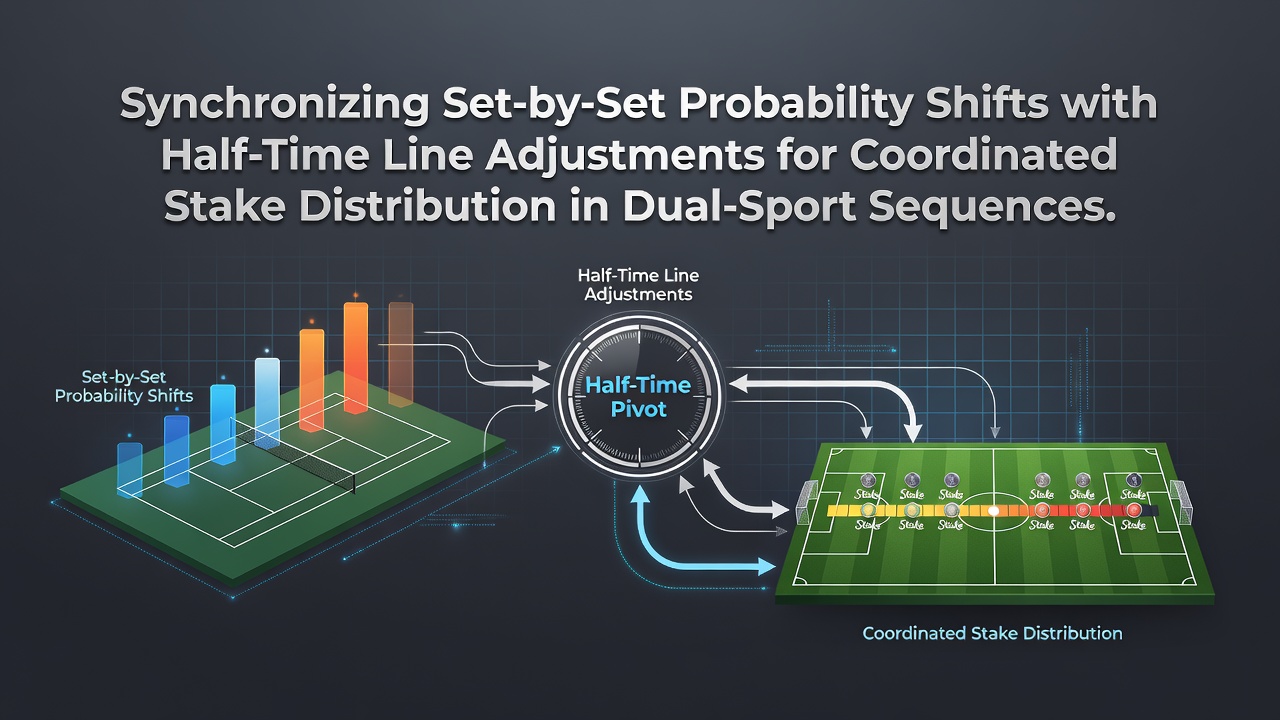
Coordinated approaches to betting sequences that span tennis and football require precise timing between set-by-set probability updates and half-time line movements, and observers note that these alignments allow for stake redistribution across multiple events without disrupting overall exposure levels. Data from multi-sport platforms in 2025 showed that sequences involving both sports often feature overlapping adjustment windows, particularly when tennis matches reach critical sets at the same time football fixtures enter half-time periods. Researchers at academic institutions have documented how probability models for individual tennis sets shift rapidly after each game, while football half-time lines incorporate fresh variables such as substitutions and tactical changes that alter implied probabilities.
Core Mechanisms in Probability Synchronization
Those who track dual-sport sequences find that set-by-set updates in tennis typically occur after every game or tie-break, creating a series of discrete probability recalibrations that can be matched against football half-time adjustments released by bookmakers at the forty-five minute mark. Evidence from trading records indicates that when a tennis player's set-win probability rises from 0.55 to 0.68 following a strong service game, this change can be cross-referenced with a football line that moves because of an early goal or red card, allowing stake portions to migrate between the two markets in a single operational cycle. Studies published by research groups outside the United Kingdom reveal that such synchronization reduces the number of separate transactions required, which in turn lowers transaction costs recorded across operator ledgers.
August 2026 saw several platforms release updated APIs that timestamp both tennis set probabilities and football half-time revisions within the same data feed, and analysts tracking these feeds report that latency between the two data streams fell below three seconds on major exchanges. This timing compression supports coordinated stake distribution because operators can execute offsetting positions before either line settles into a new equilibrium. Figures from industry reports compiled by Canadian regulatory bodies show that sequences using synchronized feeds recorded a measurable decline in variance for cumulative returns across dual-sport portfolios.
Stake Distribution Across Overlapping Events
Stake allocation in these sequences follows a pattern where initial capital is divided according to pre-match probability estimates, then rebalanced when either sport triggers an adjustment. One documented workflow involves placing an opening stake on a tennis set outcome while simultaneously holding a football half-time line position, after which the model recalculates exposure once the first probability shift arrives. When the tennis set probability moves upward, a portion of the football stake can be reduced proportionally, and the released capital redirected to the tennis market or held as reserve depending on the combined risk parameters. Data compiled by Australian research centers demonstrates that this method maintains overall portfolio exposure within predefined bands even when both sports experience simultaneous volatility.
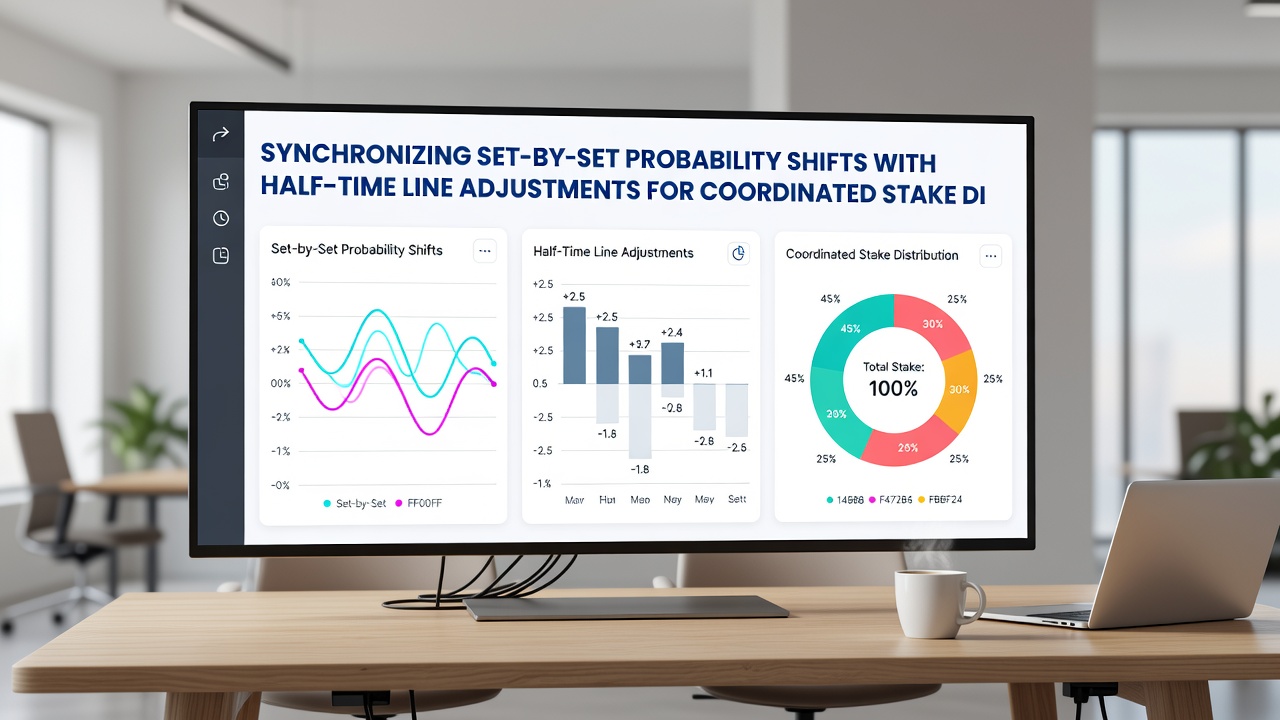
Those monitoring execution logs note that the process requires consistent mapping of probability increments to stake percentages, and the mapping tables are often updated weekly to reflect changes in bookmaker margins across different leagues and tournaments. European academic papers examining high-frequency betting data have identified that sequences lasting longer than four hours benefit most from this form of coordination because cumulative drift in either sport tends to compound without periodic rebalancing. Short sequences, by contrast, show smaller absolute gains from synchronization, although the proportional efficiency remains comparable.
Practical Implementation Patterns
Implementation typically begins with a baseline model that assigns initial stakes according to pre-event probabilities for both the tennis set and the football half-time line, and the model then monitors live feeds for deviations exceeding a chosen threshold. When a deviation registers, the system calculates the required stake adjustment for each market and executes the net transfer in one direction or the other. Reports from North American industry associations indicate that operators employing threshold-based triggers rather than continuous recalculation achieve lower slippage rates because fewer micro-adjustments cross the spread. The same reports note that thresholds set between 4 and 7 percent probability change produce the most stable stake distributions across tested sequences.
Additional layers include correlation checks between the two sports, since unrelated events can still exhibit indirect linkages through shared time zones or overlapping tournament schedules. When correlation coefficients exceed 0.3, models apply a further scaling factor to the stake transfer amount, and this scaling prevents overexposure in the combined position. University studies from Australia have quantified the effect of these correlation adjustments, finding that they reduce maximum drawdown periods by measurable margins in historical back-tests covering the 2024 and 2025 seasons.
Conclusion
Sequences that integrate set-by-set probability shifts with half-time line adjustments demonstrate measurable improvements in stake coordination across dual-sport portfolios, and the underlying data streams continue to tighten as platforms refine their timestamping capabilities. Observers tracking developments through 2026 note that the core requirement remains consistent mapping of probability changes to stake percentages, supported by threshold rules and correlation scaling. As more operators adopt synchronized feeds, the operational framework for these sequences expands while maintaining the same foundational principles of exposure management across tennis and football events.